
Finding the right LED bulb manufacturer is one of the most important decisions for importers, distributors, lighting brands, and project buyers. A good supplier does more than offer a catalog and a price list. The right partner helps you choose suitable products, control quality, manage lead time, and build a product line that fits your market.
Today, many buyers are not simply searching for the lowest quotation. They are looking for an OEM LED bulb supplier that can support stable production, consistent product performance, flexible customization, and practical communication. Whether you sell through retail, wholesale, e-commerce, or project channels, choosing the right manufacturer can directly affect your margins, returns, customer satisfaction, and long-term brand reputation. If you are comparing core product types first, you can also review MoreBulb’s LED bulb manufacturing page for a broader category overview.
This guide explains what B2B buyers should evaluate before working with a China LED bulb factory and how to compare suppliers in a more practical way.
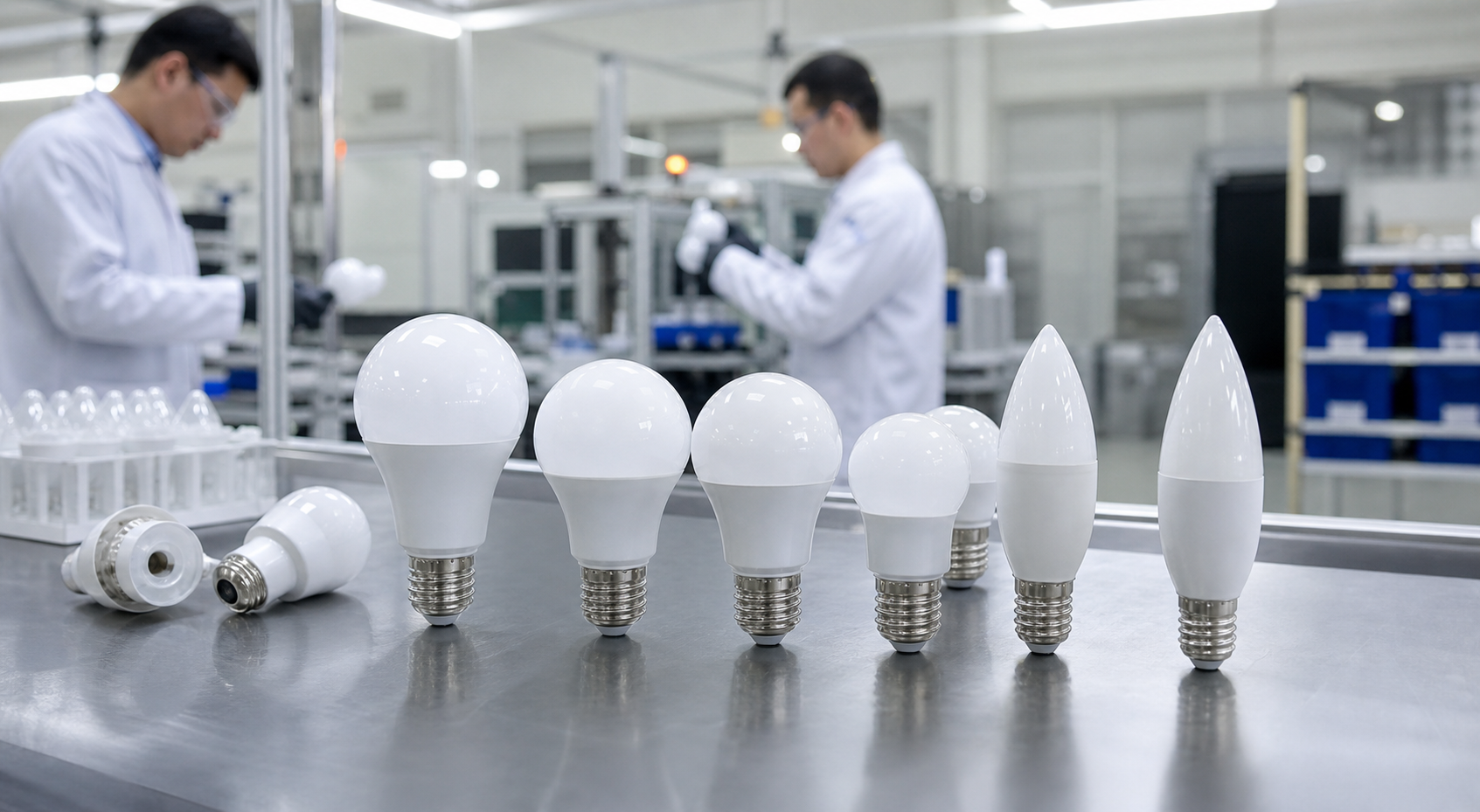
Why Working With a Professional LED Bulb Manufacturer Matters
LED bulbs may look simple, but market success depends on many details behind the product. Power stability, lumen output, color temperature consistency, driver quality, heat management, lifespan, packaging, and compliance all affect whether the product performs well after it reaches the market.
An experienced LED bulb manufacturer can help buyers reduce risk in several ways:
- Recommend suitable models for different market segments
- Match bulb specifications to local demand and price expectations
- Support OEM and private label packaging
- Improve consistency across repeat orders
- Provide sample confirmation before bulk production
- Coordinate production and shipment more efficiently
For B2B buyers, this support is especially important when developing a new product range or entering a new sales channel.
Key Factors to Evaluate When Choosing an OEM LED Bulb Supplier
1. Product Range and Market Fit
The first question is simple: does the supplier offer the right LED bulb range for your business?
Some buyers need standard household products such as A60, A65, G45, and candle bulbs for everyday retail and wholesale demand. Others need higher lumen products, decorative solutions, or market-specific base types. A capable manufacturer should help you compare options based on your target customer rather than pushing the same item to every buyer. Buyers expanding into decorative ranges may also want to read this decorative filament sourcing guide.
If your goal is long-term sourcing, it is better to work with a supplier that can support multiple related product lines. This creates more flexibility for future expansion and can simplify quality management and packaging coordination.
2. OEM and Private Label Capability
Many buyers today need more than standard stock items. They want branding, packaging, and product details that match their own market strategy. A reliable OEM LED bulb supplier should be able to support:
- Logo printing
- Private label packaging
- Custom wattage or lumen positioning
- Custom color temperature options
- Market-specific instruction or carton design
- Sample development for approval
This matters because private label projects need more coordination than standard wholesale orders. If the factory cannot manage specification details clearly, the risk of production mistakes increases quickly.
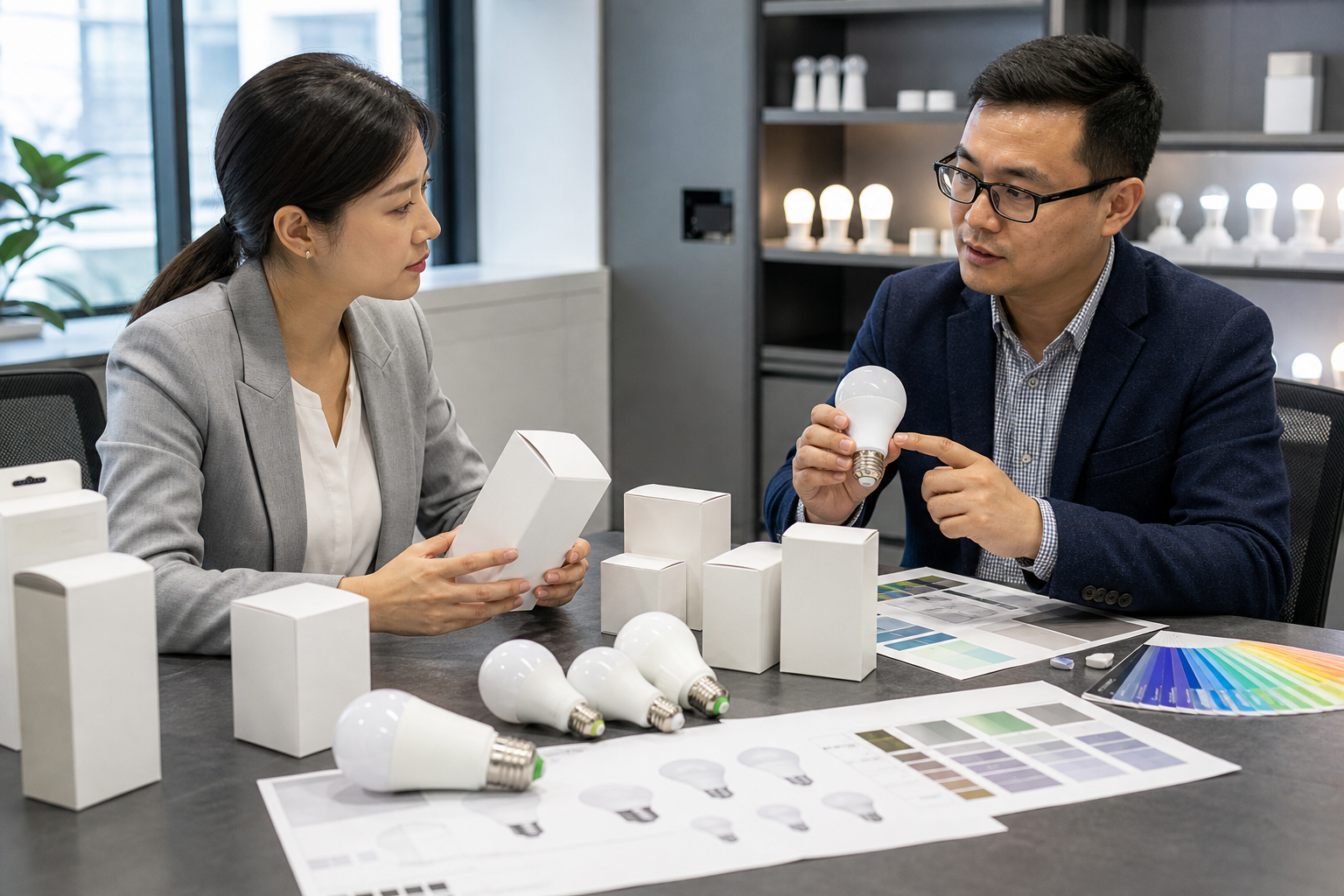
3. Quality Control Process
Quality consistency is one of the clearest differences between factories. Buyers should not only ask whether inspection exists. They should ask how it works.
A professional LED bulb manufacturer should be able to explain the basic quality control process, such as raw material checks, in-line inspection, finished product testing, and pre-shipment review. Even if the exact testing standards vary by product category and market, the factory should show that quality is controlled as a process rather than treated as a final-step formality.
For repeat business, consistency matters more than one good sample. A dependable supplier understands that stable performance across bulk orders is what builds trust with distributors and end customers.
4. Communication and Technical Support
Many sourcing problems are not caused by production alone. They come from unclear communication before production begins. For example, buyers may assume a certain lumen level, packing style, or certification scope, while the supplier understands the request differently.
This is why communication quality should be part of supplier evaluation. A good China LED bulb factory should respond clearly to questions about:
- Product specifications
- MOQ
- Sample process
- Lead time
- Packaging requirements
- Application recommendations
- Certification availability for target markets
Clear communication reduces delays, avoids incorrect assumptions, and makes cooperation much easier as projects become more complex. For example, if your sales plan includes decorative or hospitality lighting, it helps to define that early and align on whether a standard LED bulb line or a dedicated LED filament bulb range is the better fit.
5. MOQ and Order Flexibility
MOQ is not only a purchasing issue. It is also a planning issue. Buyers launching a new series usually need flexibility during the first stage, especially when they are testing market response or preparing multiple SKUs.
Some LED bulb manufacturers are more practical with mixed items, standard packaging, or sample development. Others are better suited to large-volume repeat orders. Neither model is wrong, but the supplier should fit your current business stage.
If your project involves customization, ask early whether MOQ changes according to packaging, logo printing, or technical adjustments. This helps you calculate the real sourcing cost before moving too far forward.
6. Lead Time and Production Reliability
A strong quotation means little if delivery is unstable. Buyers should confirm normal lead time, sample time, and the steps required before mass production begins. This is especially important for seasonal sales, promotional launches, or distributor restocking cycles.
A reliable OEM LED bulb supplier should explain the process from inquiry to shipment in a practical way. In most cases, that includes product selection, sample confirmation, order approval, production, quality inspection, and shipment coordination.
Reliable timing improves planning for both the buyer and the supplier. It also reduces the pressure that often leads to avoidable mistakes.
Questions B2B Buyers Should Ask Before Placing an Order
When comparing LED bulb manufacturers, it helps to use a consistent list of questions. Here are some of the most useful:
- Which LED bulb models are most suitable for my market?
- What customization options are available for private label orders?
- What is the MOQ for standard items and for OEM packaging?
- Can samples be provided before bulk production?
- What certifications or compliance support are available for my destination market?
- What is the normal production lead time after sample confirmation?
- How is product quality checked during production?
- Can you support long-term supply if the product line expands?
These questions help move the discussion from general sales language to practical sourcing details.
Common Mistakes Buyers Make When Choosing a Supplier
One common mistake is choosing only by price. Low pricing may look attractive at the beginning, but if the product has unstable performance, poor packaging execution, or inconsistent repeat orders, the total business cost becomes much higher.
Another mistake is approving samples without confirming full order details. Sample approval should connect directly to the final product specification, packaging standard, and production expectations. Otherwise, buyers may assume the bulk order will match the sample in every detail without having that confirmed clearly.
A third mistake is selecting a supplier whose strengths do not match the target market. For example, a factory that is suitable for basic wholesale supply may not be the best partner for decorative retail packaging or higher-spec branded projects.

What Global Buyers Usually Need From a China LED Bulb Factory
In practical terms, most serious B2B buyers are looking for five things:
- Stable and saleable LED bulb products
- Clear OEM or private label support
- Reasonable MOQ and sampling process
- Consistent quality and delivery
- Responsive communication during the full project cycle
When a supplier can support all five, the relationship becomes much more valuable than a one-time transaction. That is usually the foundation for repeat orders and broader product cooperation.
Building a Long-Term Supply Relationship
The best sourcing relationships usually start with a clear, manageable project. Buyers define the product type, target market, quantity range, and branding requirements. The manufacturer then helps refine the product direction, prepares samples, confirms details, and moves toward production with fewer assumptions on both sides.
This process works better when both parties focus on fit, clarity, and consistency rather than speed alone. For many importers and lighting brands, a dependable LED bulb manufacturer becomes a long-term supply partner that supports both current business and future category expansion.
Conclusion
Choosing the right LED bulb manufacturer is not only about finding a factory that can make a product. It is about finding a partner that understands your market, supports OEM execution, manages quality carefully, and communicates clearly from sampling to shipment.
For buyers comparing suppliers, the smartest approach is to evaluate product range, customization ability, quality control, MOQ, lead time, and communication together. That gives a more realistic picture of whether a supplier can support stable long-term business.
If you are currently looking for an OEM LED bulb supplier, start with clear product requirements and ask focused questions early. A reliable partner will help you move from idea to sample and from sample to bulk production with much less risk. If decorative styles are also part of your sourcing plan, continue with our related decorative bulb article for a more category-specific evaluation framework.