
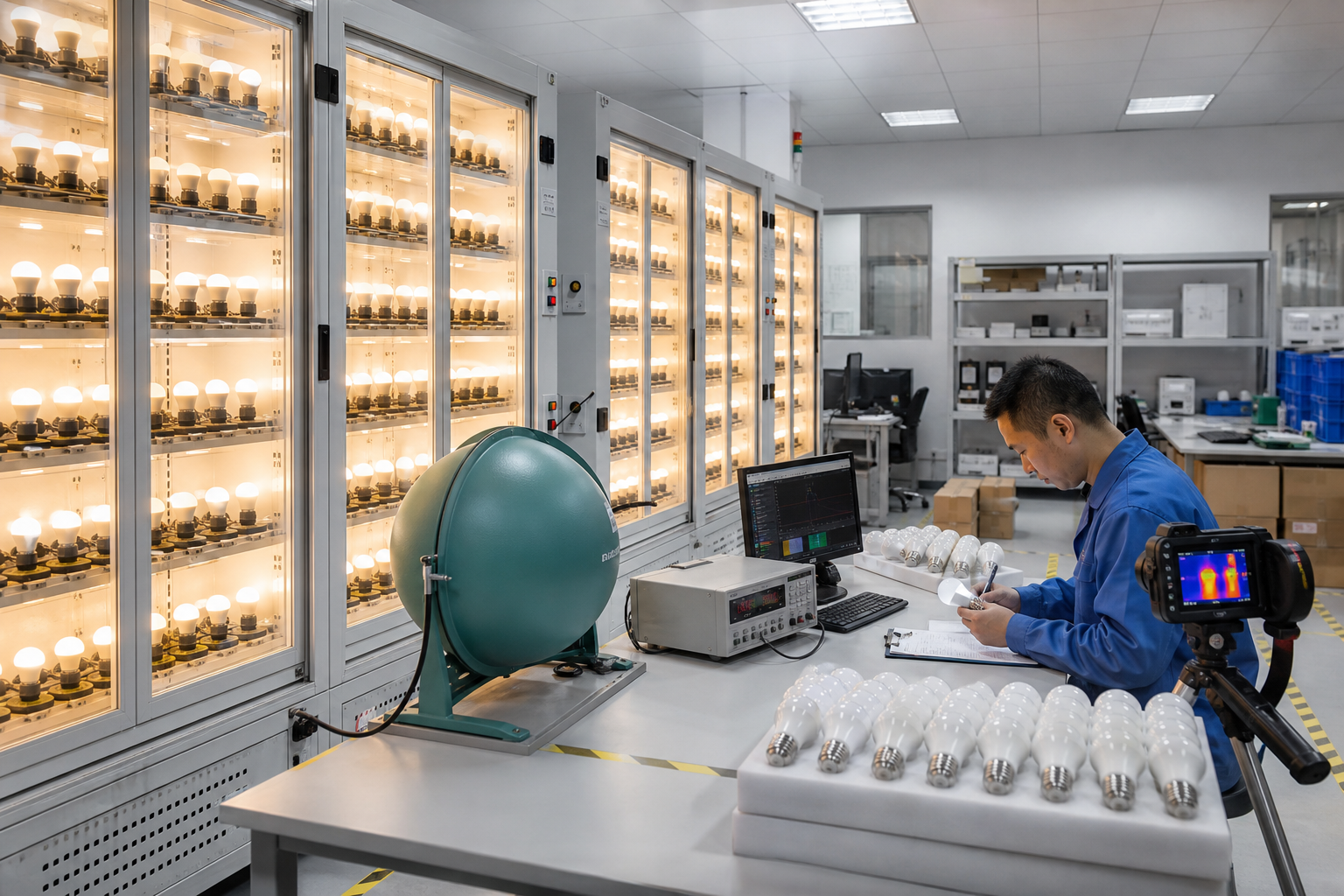
LED bulb quality inspection is the process of checking whether a production batch matches the approved specification, golden sample, safety requirements, and packaging standard before shipment. It should verify more than whether the bulbs switch on. A useful inspection covers appearance, dimensions, electrical performance, light output, color consistency, thermal behavior, aging results, markings, packaging, and quantity.
For importers and distributors, this process reduces preventable returns and disputes. Two A60 bulbs can look identical but use different drivers, LEDs, plastics, adhesives, or thermal materials. Those differences may cause flicker, color variation, early lumen loss, cap failure, or overheating.
This guide explains how to plan LED bulb quality inspection at a factory. It provides sample checks, technical tests, comparison criteria, procurement controls, and practical questions for suppliers. Use it to create an inspection specification, align the factory and third-party inspector, and decide whether a batch should be released, reworked, or held for further testing.
1. What an LED Bulb Inspection Should Confirm
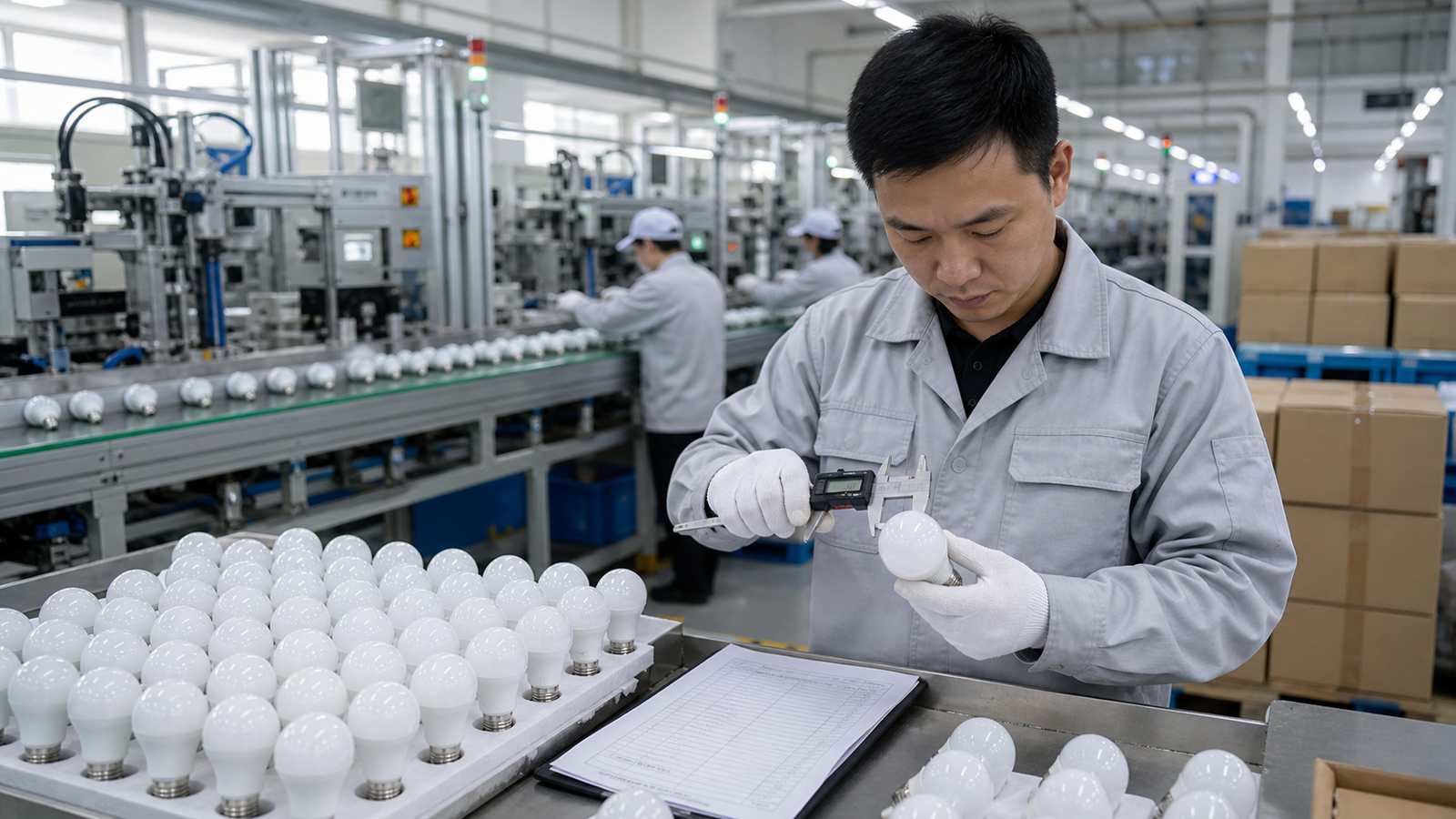
An effective LED bulb quality inspection starts with controlled references. The inspector needs the purchase order, final data sheet, approved artwork, golden sample, carton specification, and agreed defect limits. A catalog page or quotation alone is not enough.
The inspection should answer four questions:
- Is the batch the correct product and quantity?
- Does it match the approved construction, performance, marking, and packaging?
- Are defects within the agreed acceptance limit?
- Is there evidence that production passed required factory tests?
For example, an order may specify an A60 E27 lamp rated at 10 W, 806 lumens, 3000 K, CRI 80, and non-dimmable operation. The inspector should not accept a visually similar bulb without measuring sampled units and checking the model code, packaging, and batch records.
Key point: define acceptance criteria before production begins. If tolerances for wattage, lumens, CCT, dimensions, appearance, and packaging are missing, the final decision becomes subjective.
2. Technical Tests and Inspection Sequence
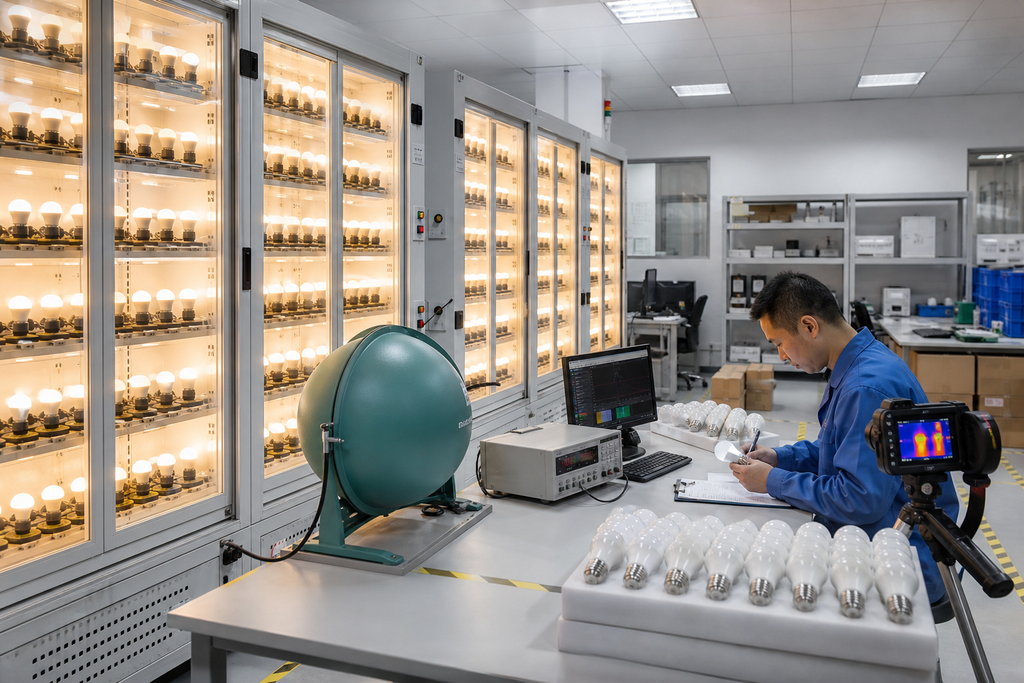
The depth of LED bulb quality inspection depends on market risk, order value, product type, and available equipment. Basic checks can happen on the production floor. Photometric, thermal, safety, and endurance tests normally require laboratory equipment and more time.
Include these checks in the inspection plan:
- model, shape, dimensions, cap, weight, materials, finish, and assembly quality
- rated voltage, input power, current, power factor, startup, and dimming status
- initial lumens, efficacy, CCT, CRI, color tolerance, beam pattern, and flicker
- cap security, insulation, dielectric strength, leakage current, and accessible-part safety
- case temperature, thermal stability, switching cycles, aging records, and failure rate
- lamp marking, date or batch code, barcode, box, manual, carton, and pallet details
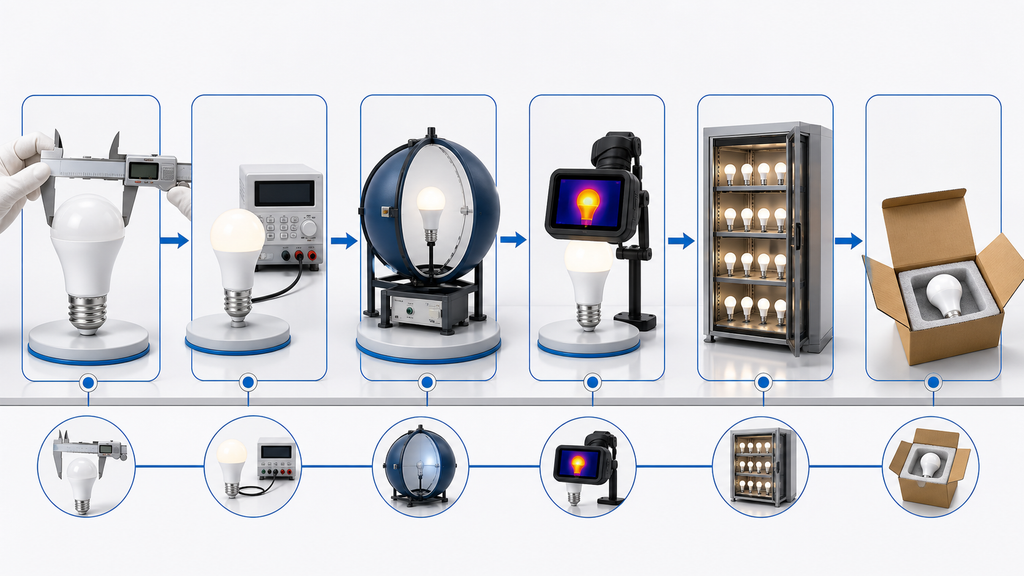
A practical LED bulb quality inspection sequence is:
- Confirm production completion and randomly select cartons across the batch.
- Verify quantity, assortment, carton marks, and packaging condition.
- Inspect workmanship, dimensions, markings, and function on sampled lamps.
- Measure electrical and photometric performance with calibrated equipment.
- Review factory aging, safety, thermal, and traceability records.
- Record defects with photographs, model codes, carton numbers, and test data.
Do not use one hand-picked sample supplied by the production team. Random selection should cover different cartons, pallets, production times, and, where practical, batch codes.
3. Comparing Inspection Levels and Evidence
Not every check provides the same confidence. Use this table when planning LED bulb quality inspection.
| Inspection Level | Typical Checks | Equipment or Evidence | Main Limitation | Best Use |
|---|---|---|---|---|
| Visual and quantity | Finish, assembly, marking, packing, count | Golden sample, drawings, artwork | Cannot prove electrical or light performance | Every shipment |
| Functional sampling | Startup, basic power, dimming, noise | Power meter, test fixture, dimmer | Limited photometric detail | Routine production release |
| Photometric testing | Lumens, CCT, CRI, efficacy, color consistency | Integrating sphere and calibrated meter | Requires controlled equipment | New models and periodic verification |
| Safety and thermal review | Insulation, dielectric strength, leakage, temperature | Safety tester, thermal equipment, reports | Some tests are destructive or time-consuming | Qualification and risk-based checks |
| Reliability evidence | Aging, switching, failure trend, lumen maintenance | Test records, retained samples, long-duration testing | Cannot be completed during one-day inspection | Supplier and product validation |
Agree on sampling and defect classification in writing. Critical defects may create a safety or regulatory risk. Major defects can affect use, performance, or saleability. Minor defects usually affect appearance without preventing normal use.
AQL sampling can support a shipment decision, but it does not guarantee that every unit is defect-free. Match the sampling level and limits to the product risk. Increase checks for a new supplier, new model, changed component, failed previous order, or high-return sales channel.
4. Procurement Factors Importers and Distributors Should Control
LED bulb quality inspection works best when connected to purchasing documents and factory processes.
MOQ and pilot orders
A smaller pilot order can expose assembly, packaging, and consistency problems before a full launch. Ask whether the pilot uses normal production tools, components, and workers. A showroom sample is not a substitute for production evidence. Include the LED bulb quality inspection cost and sample destruction allowance in the project budget.
Certifications and compliance records
Requirements vary by market, voltage, product construction, and sales channel. Review certificates and reports for the exact model family, driver, wattage, and construction. Confirm current obligations with an accredited laboratory or local compliance specialist. A pre-shipment check supports conformity control but does not replace product certification.
Packaging and labeling
Approve artwork before printing. Check ratings, warnings, importer information, language, barcode, disposal marks, and model consistency. Define individual protection, carton strength, pallet pattern, and e-commerce parcel requirements. Add carton drop or vibration testing when distribution risk justifies it.
Lead time and inspection timing
Book inspection after production and packaging are sufficiently complete but before final payment and shipment release. Allow time for reinspection or rework. If the schedule leaves no correction window, the inspection becomes a report rather than a control point.
Shipping and corrective action
The purchase agreement should state who pays for rework, sorting, reinspection, replacement, and delay when the batch fails. Hold shipment until corrective evidence is accepted. Keep signed reports, test data, defect photos, golden samples, and retained units for traceability.
5. How MoreBulb Supports Factory Quality Control
MoreBulb supports importers, distributors, lighting wholesalers, brands, e-commerce sellers, fixture factories, and contractors. As a China LED bulb factory with more than ten years of export experience, it can coordinate specifications, samples, production controls, packaging, and LED bulb quality inspection preparation.
Project quality discussions can cover:
- product drawings, electrical and photometric tolerances, and golden samples
- incoming material checks for LEDs, drivers, caps, housings, and packaging
- in-process checks for assembly, soldering, cap fit, marking, and function
- power, lumen, CCT, CRI, flicker, thermal, safety, switching, and aging tests
- private label artwork, barcodes, manuals, carton marks, and pallet plans
- batch codes, retained samples, inspection criteria, and corrective actions
Before production, MoreBulb can review the destination market, application, target specification, order quantity, packaging channel, and inspection needs. Buyers can then agree on measurable limits and reporting requirements.
The final LED bulb quality inspection should still refer to the signed specification and random production samples. Buyers should confirm certification scope, test methods, sampling plan, warranty, and shipment-release authority in writing.
FAQ
What documents are needed for LED bulb quality inspection?
Provide the purchase order, final specification, dimensioned drawing, golden sample, approved artwork, packaging standard, test limits, sampling plan, and defect classification. Include relevant certificates or reports and any earlier corrective-action records. The inspector also needs the order quantity, model breakdown, carton assortment, and production location. Clear documents make LED bulb quality inspection measurable and reduce arguments about subjective appearance or performance.
Which LED bulb tests can be completed during a pre-shipment inspection?
Typical same-day checks include quantity, workmanship, dimensions, markings, packaging, startup, input power, power factor, basic photometric measurements, and selected safety tests when equipment is available. Long aging, lifetime, switching, and lumen-maintenance tests cannot be completed in one visit. Review existing factory records and retained samples for those items, then use periodic independent verification for higher-risk products.
How many bulbs should an inspector test?
The answer depends on order size, defect risk, test type, and the agreed sampling standard. Visual checks may use an AQL-based sample, while destructive or laboratory tests use fewer units. New models and suppliers justify deeper sampling. Define sample quantities before production and distinguish visual, functional, photometric, safety, and packaging tests. Random selection across cartons is more important than testing convenient factory-selected units.
What are common LED bulb quality defects?
Common defects include scratches, gaps, loose caps, poor printing, incorrect labels, startup failure, flicker, audible noise, wrong wattage, low lumens, inconsistent CCT, weak dimming, overheating, and damaged packaging. Mixed models or barcodes also create serious warehouse problems. Good LED bulb quality inspection records each defect with photographs, measured data, carton references, and severity so the supplier can sort and correct the batch.
Does passing inspection guarantee LED bulb lifetime?
No. A pre-shipment inspection is a sample-based snapshot and cannot prove a multi-year lifetime claim. It can verify workmanship, initial performance, selected safety points, packaging, and factory aging evidence. Lifetime confidence comes from product design, controlled components, thermal performance, switching and endurance tests, production consistency, and field data. Combine shipment inspection with supplier qualification, retained samples, periodic testing, and warranty monitoring.
Conclusion
LED bulb quality inspection protects buyers when it is based on clear references, random sampling, calibrated measurements, and written acceptance limits. Check appearance, dimensions, electrical performance, light quality, safety evidence, thermal behavior, aging records, markings, packaging, and quantity.
Do not wait until shipment day to define quality. Approve the specification, golden sample, artwork, test plan, defect limits, corrective-action process, and release authority before production. This creates a practical system for both the first order and repeat orders.
CTA
Contact MoreBulb to discuss your LED bulb quality inspection requirements, request production samples, prepare an OEM quotation, or talk to the engineering team about testing, packaging, and shipment controls.