
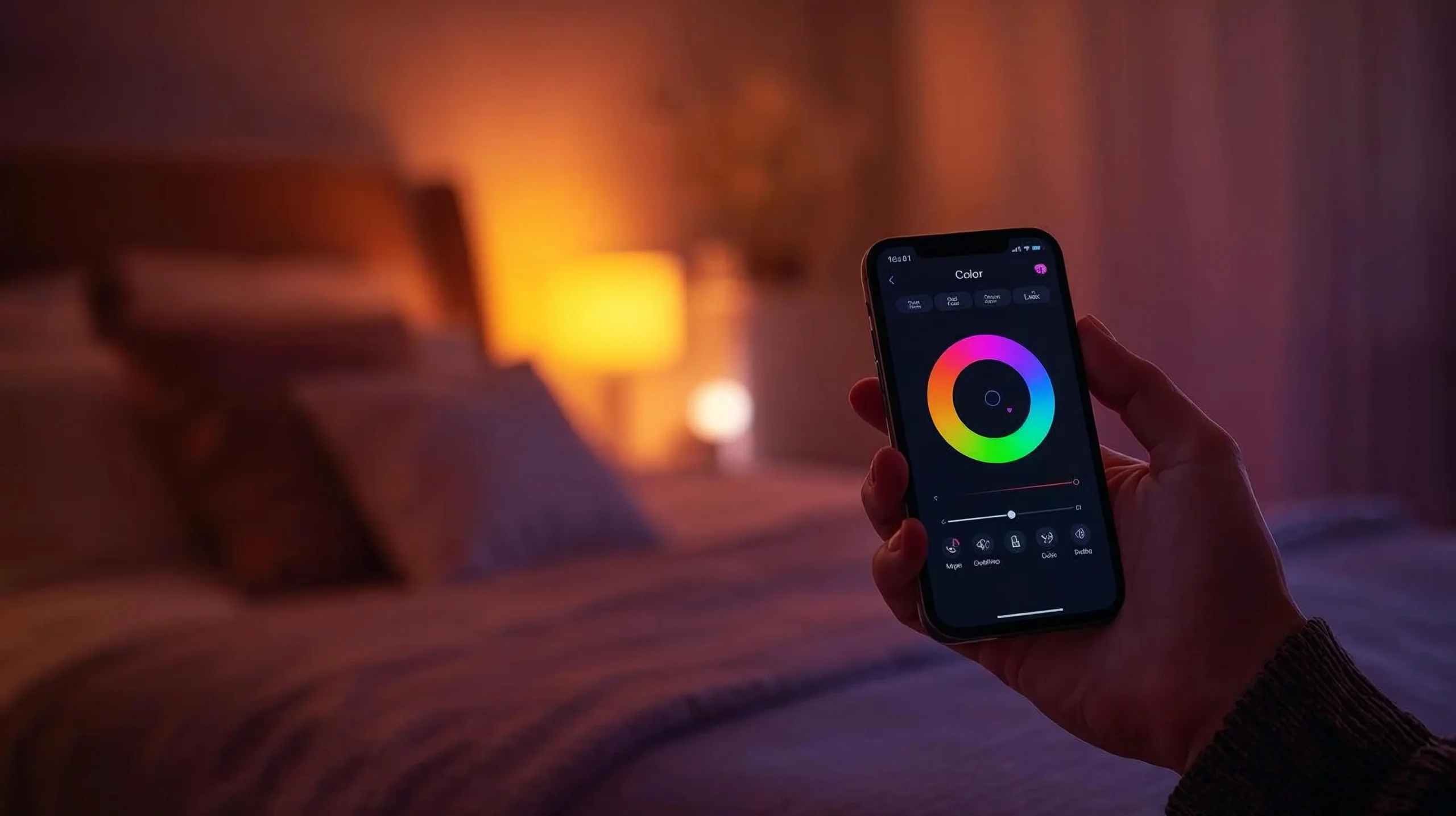
Choosing a smart bulb manufacturer requires more than comparing wattage, lumens, and unit price. A connected bulb must also pair reliably, stay online, respond quickly, and work with the promised app or voice platform. If the hardware, firmware, cloud service, or mobile application changes, buyers may face returns that ordinary lighting tests cannot predict.
Importers, distributors, private label brands, and e-commerce sellers therefore need to evaluate the complete product system. That includes electrical safety, radio performance, cybersecurity, app ownership, update policy, packaging claims, and long-term component control. A sample that connects once in a meeting room is not enough evidence for a commercial order.
This guide explains how to compare a smart bulb manufacturer, prepare an accurate RFQ, and approve WiFi, Bluetooth, RGB, and Tuya-compatible products. It covers technical specifications, test plans, platform choices, MOQ, certifications, OEM packaging, lead time, and shipping. Use it to reduce compatibility risks and build a smart lighting range that can be supported after launch.
1. Why Smart Bulb Sourcing Is Different
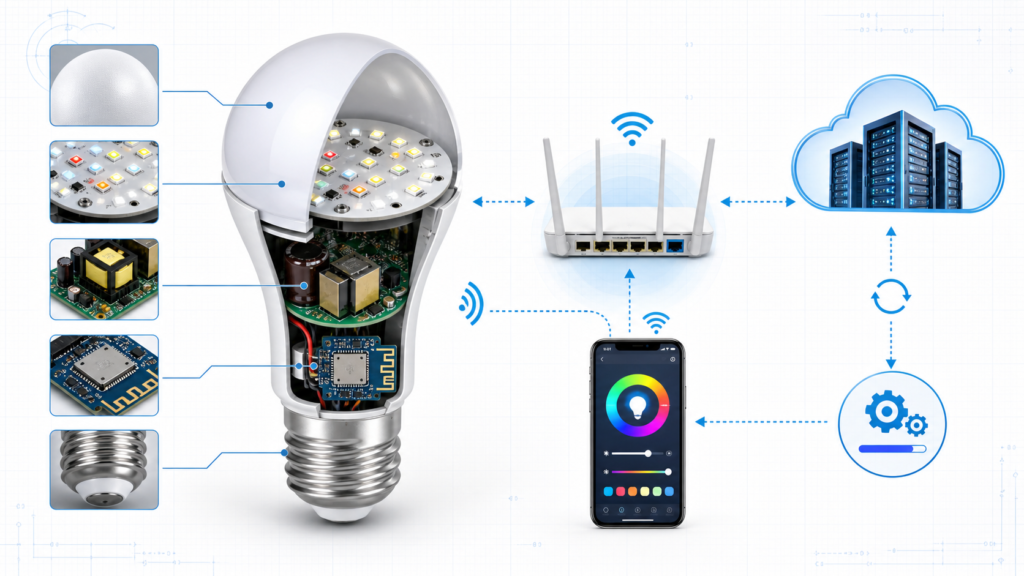
A standard LED bulb is mainly a lighting product. A smart bulb combines:
- LED light source and optical parts
- driver and power supply
- wireless module and antenna
- embedded firmware
- app, cloud service, and voice-assistant integration
A failure in any layer affects the user experience. The lamp may produce correct light but disconnect from the router. It may pair correctly but show uneven RGB colors.
For example, “WiFi smart bulb” does not define compatibility. Buyers must confirm whether it uses 2.4 GHz WiFi, Bluetooth-assisted pairing, a Tuya-based app, or another ecosystem. Verify voice-control claims for the intended country and account region.
Key point: source a managed connected product, not only a bulb with a wireless module. A responsible smart bulb manufacturer should identify the module, firmware version, app, cloud dependency, supported functions, and update process in the approved specification.
2. Technical Specifications and Validation Tests
Begin with a written use case. State the market, voltage, router environment, app, functions, order volume, and sales channel. Then ask the smart bulb manufacturer to complete a data sheet.
Important electrical and lighting specifications include:
- rated voltage, frequency, power, and power factor
- lumen output, efficacy, CCT, CRI, and color tolerance
- bulb shape, dimensions, base, and beam angle
- dimming range, standby power, flicker performance, and lifetime basis
- RGB or RGB+CCT architecture and scene functions
Connected-product specifications should cover:
- wireless protocol and supported frequency band
- module, chipset, antenna, and applicable radio reports
- pairing method, reset sequence, and maximum setup time
- app publisher, servers, privacy policy, and supported regions
- timers, groups, scenes, sharing, and offline behavior
- firmware version, over-the-air update method, and support period
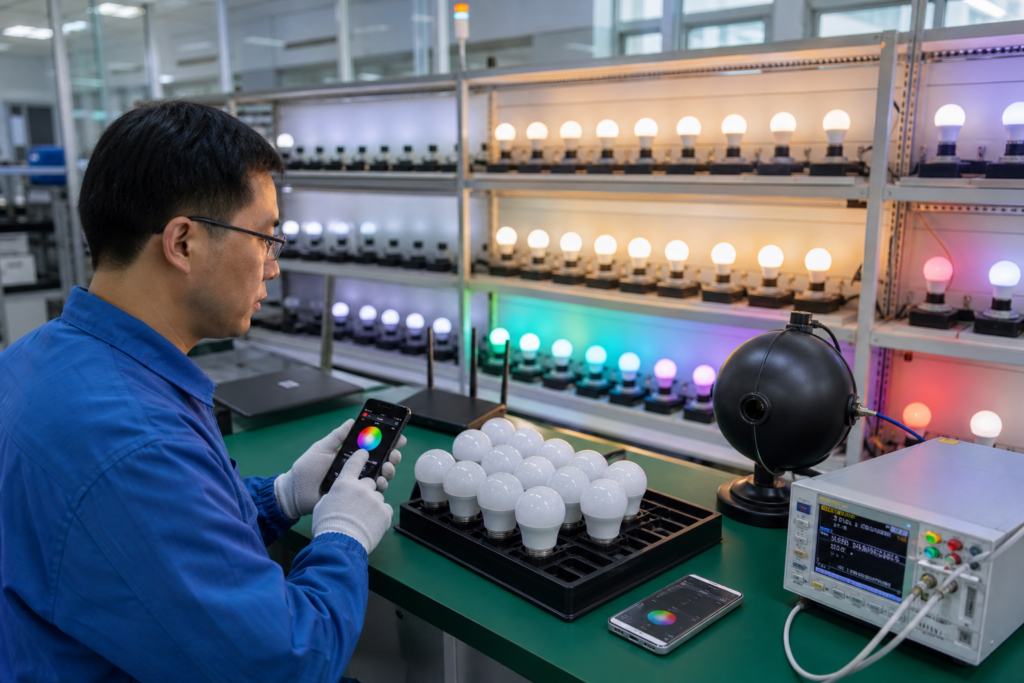
A practical smart bulb manufacturer validation plan should use more than one router. Evaluate pairing after reset, weak signals, power-cycle recovery, group control, router replacement, app reinstall, and update recovery. Run samples on relevant iOS and Android versions.
Measure power, lumens, CCT, CRI, flicker, dimming, RGB output, and temperature. Conduct aging and switching tests under defined conditions. The smart bulb manufacturer should link each batch to its driver, module, firmware, and inspection results.

Do not approve packaging before system testing is complete. Every app, platform, protocol, and voice-control statement on the box must match the tested production configuration.
3. Comparing Smart Bulb Platforms and Specifications
The right platform depends on budget, time to market, brand control, and after-sales capacity. Use the following comparison as an RFQ starting point.
| Solution | Typical Strength | Main Buyer Risk | Details to Confirm |
|---|---|---|---|
| WiFi app bulb | Direct connection without a separate hub | Router compatibility and cloud dependence | 2.4 GHz support, pairing flow, server regions, app updates |
| WiFi + Bluetooth bulb | Easier discovery and setup in many use cases | More complex module and permission handling | Bluetooth role, fallback behavior, reset process, phone requirements |
| Tuya-compatible bulb | Established platform and faster private label launch | Platform fees, account ownership, and feature limits | App route, product ID, licensing, voice platforms, OTA control |
| Bluetooth-only bulb | Simple local control and lower cloud dependence | Limited remote access and control range | Mesh or point-to-point design, device limits, app compatibility |
| Custom app solution | Greater brand and feature control | Higher development cost and ongoing maintenance | Source ownership, SDK, cloud contract, security updates, support term |
Compare suppliers on one normalized sheet. Record voltage, wattage, lumens, CCT range, RGB type, standby power, dimensions, base, protocol, chipset, app, firmware, certifications, packing, warranty, and Incoterm.
Ask the smart bulb manufacturer whether substitutions require approval. A different driver, LED, module, or firmware can change output, temperature, radio performance, or compatibility. The signed golden sample and specification should define controlled components.
A cheaper quotation is not equivalent if it excludes platform charges, custom app work, certification, firmware support, or packaging setup. Request a complete cost breakdown from each smart bulb manufacturer.
4. Procurement Factors for Importers and Distributors
Commercial terms should reflect both the physical lamp and its digital services.
MOQ and sample stages
Ask for separate MOQs for hardware, firmware, printing, boxes, and private label apps. A smart bulb manufacturer may support a pilot on an existing platform, while a custom app normally needs more volume and development cost.
Certifications and compliance
Requirements vary by country, voltage, wireless technology, and channel. Evidence may cover electrical safety, EMC, radio, energy, environmental substances, and cybersecurity. Request exact-model reports and verify local labeling, privacy, and importer duties with qualified advisers.
Packaging and user instructions
Packaging must state the correct app, frequency, setup steps, voltage, base, and compatibility. Add a readable QR code, reset instructions, support contact, and required legal text. Test all links from production artwork.
Lead time and change control
Separate time for samples, app setup, certification, artwork, production, aging, inspection, and shipping. Confirm who can release OTA updates. Require written notice for module, firmware, driver, LED, and packaging changes.
OEM and private label options
Options include bulb printing, branded boxes, manuals, app panels, and predefined scenes. A custom app brings more ownership, maintenance, privacy, and cost decisions than a branded platform interface. Ask the smart bulb manufacturer what is included.
Shipping and inspection
Review carton strength, inner protection, pallet layout, and container quantity. Inspection should cover markings, electrical data, light output, pairing, reset, RGB/CCT functions, aging records, packaging, and sampled drop tests.
5. How MoreBulb Supports OEM Smart Bulb Projects
MoreBulb works with importers, distributors, brands, e-commerce sellers, and project buyers. As a China factory-type smart bulb manufacturer with more than ten years of export experience, it can coordinate connected products for private label orders.
Project discussions can cover:
- WiFi, RGB, dimmable, and Tuya-compatible smart bulb options
- target voltage, power, lumen output, CCT range, shape, and base
- app functions, pairing flow, platform claims, and firmware version
- samples for lighting, connectivity, packaging, and user testing
- logo marking, labels, manuals, retail boxes, and export cartons
- production inspection, aging, batch control, and shipment planning
MoreBulb can review the market, target price, volume, functions, and packaging before recommending a route. This prevents custom work from being quoted as a standard item.
Buyers should provide the country, channel, forecast, platform, integrations, specification, certification needs, artwork, and launch date. The smart bulb manufacturer can then clarify documentation and sampling. The importer remains responsible for market compliance, privacy obligations, platform terms, and product claims.
FAQ
What should I include in an RFQ to a smart bulb manufacturer?
State the destination country, voltage, bulb shape, base, wattage, lumen target, CCT or RGB functions, wireless protocol, preferred app, voice platforms, quantity, certifications, and packaging. Also define whether you need standard Tuya compatibility, a branded app panel, or a fully custom application. Include target launch timing and test requirements so the smart bulb manufacturer can separate standard supply from development work.
Are Tuya smart bulbs the same as custom-app smart bulbs?
No. A Tuya-compatible bulb uses the Tuya ecosystem and may support several branding routes, depending on the commercial setup. A custom app can provide more control over identity and functions but requires development, cloud, security, maintenance, and ownership decisions. Ask who controls the product account, firmware releases, app listing, user data, and long-term support before choosing either route.
Which certifications do private label smart bulbs need?
The answer depends on the destination, voltage, radio technology, product design, and channel. Electrical safety, EMC, radio, energy, environmental, and cybersecurity requirements may all apply. Reports must cover the exact bulb and wireless module, not a similar product. Confirm current standards, registration, labeling, privacy, and importer obligations with an accredited laboratory or compliance specialist before production.
How should buyers test smart bulb samples?
Test lighting and connectivity together. Measure electrical data, lumens, color, flicker, temperature, and dimming. Pair multiple samples with different routers and phones. Check reset, grouping, schedules, power-cycle recovery, weak-signal behavior, app reinstall, and firmware updates. Repeat key tests after aging. Record the module and firmware version, then retain an approved sample for production comparison.
What affects the MOQ for OEM smart bulbs?
MOQ depends on whether the buyer selects existing hardware and firmware or requests a custom module, function set, app, printing, and retail box. Different voltages, bases, wattages, or artworks may create separate SKUs and minimums. Ask the smart bulb manufacturer to itemize MOQ and setup charges for the bulb, firmware, app route, printing, packaging, and each market version.
Conclusion
Selecting a smart bulb manufacturer means assessing the complete system. Compare light performance, driver, wireless module, firmware, app, cloud service, security, certifications, and update responsibility. Validate pairing and recovery across realistic routers and phones.
Confirm MOQ by SKU, platform costs, packaging claims, component changes, lead time, inspection, and support in writing. A clear specification and retained sample provide a stable production reference.
Discuss Your Smart Bulb Manufacturer Project With MoreBulb
Contact MoreBulb for an OEM smart bulb quotation, request WiFi or RGB smart bulb samples, discuss private label packaging, or talk to the engineering team about your platform and market requirements.
- OEM / ODM and private label support
- Product specification and sample review
- Packaging and export order coordination
- Factory-side quotation support